 Since I began writing my book, Music Between Your Ears, I’ve learned a great deal about the field of music therapy. I am grateful to Dr. Suzanne Sorel for recently expanding my understanding further. I heard her speak at a music therapy conference earlier this year. Afterward, I contacted her to ask if she would be willing to discuss how different philosophical approaches influence music therapy education. She graciously accepted my invitation.
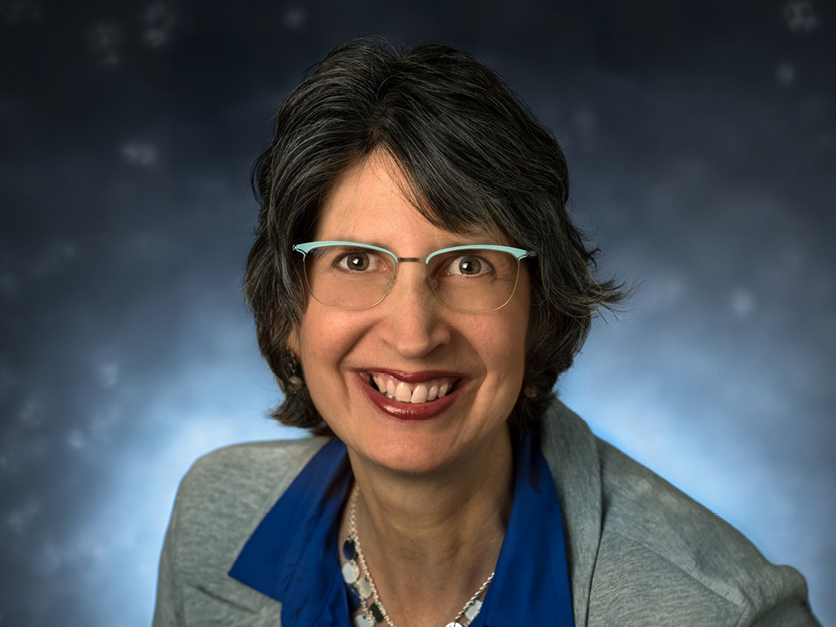
Dr. Sorel relates that she was always interested in music while growing up, but her mother insisted she pursue a practical career if she wanted music to remain part of her life. Knowing she neither wanted to teach music nor live the life of a performer, she became a highly trained music therapist. She earned a doctor of arts (DA) degree and holds credentials as a licensed creative arts therapist (LCAT) and a board-certified music therapist (MT-BC). She also has decades of clinical experience. A professor at Molloy University, and passionate about preparing future music therapists, she established Molloy’s Graduate Music Therapy Program in 2008 and directed it through 2024.1 During that time, she taught and supervised hundreds of music therapists from the local, national, and international communities.
We began by discussing how music therapists orient their relationship with music. Dr. Sorel describes herself as a music-centered therapist. She explains, "If it makes musical sense, it makes clinical sense." Citing a colleague’s work, she adds, "Sometimes, it can be challenging to access our feelings in words. Music can be a powerful way to bypass blocks and experience true healing and newfound understanding."
I then shared my perspective, which comes from caring for patients with neurological disorders for over 30 years. Whatever form of therapy is being practiced—physical, occupational, speech, or music—I believe its chief purpose is to improve a patient's functioning. That’s why, in my view, the patient care goals must be the focus. Music is the means by which a music therapist helps the patient achieve those goals.
Our subtly different starting points drove home to me the fact that music therapy encompasses several schools of thought, each with its own philosophy. As a neurologist, I became familiar with music therapy through neurologic music therapy, especially the work of Michael Thaut, Ph.D. Dr. Thaut, formerly a professor at Colorado State University, is now a professor at the University of Toronto. The music therapist who advised me while writing my book,4 Dwyer Conklin, trained under Dr. Thaut in Colorado.
Dr. Sorel relates that her approach is grounded in humanistic principles and focuses primarily on emotional and behavioral concerns. Her practice is rooted in the work of Paul Nordoff and Clive Robbins, particularly their pioneering explorations into the clinical use of improvised music.5 The Nordoff-Robbins approach to music therapy is based on the belief that every person possesses an innate responsiveness to music that can support personal growth and healing. Originally devised for children with developmental disabilities, this approach is now used with both children and adults in many different settings.
Keeping Music Therapy Education in Mind
Noting that her clients respond best when therapists take into account musical elements such as key, tone color (timbre), and volume (dynamics), Dr. Sorel believes that strong musicianship is the foundation of music therapy training. The graduate program she founded emphasizes piano and guitar skills—Dr. Sorel points out that this is consistent with accrediting requirements of the American Music Therapy Association—and prospective students must pass an audition in order to be admitted to the program.
This led us to discuss Dwyer Conklin's contribution to my book.6 His view is that music therapy programs can teach the musical skills students need after they are admitted. He argues that programs would do well to consider accepting students without music degrees because they can bring valuable knowledge and expertise from other fields, such as the biological sciences.
Dr. Sorel recognizes that music therapy programs may be isolating themselves by being housed within music departments. She is open to the idea that positioning music therapy more clearly as a health care profession could help bring it further into the mainstream of the healing arts.7 She also acknowledges that giving priority to piano and guitar may be too narrow a focus; for example, given the value of rhythm to music therapy, percussion skills might deserve greater recognition. Even so, she holds that strong musical ability remains an essential prerequisite for anyone seeking to enter music therapy training.
Wrap-Up
Our dialogue broadened my understanding of the field of music therapy and its diverse currents. Over the course of our conversation, I gained a deeper appreciation for another approach to music therapy and how its practitioners utilize music to achieve therapeutic goals. I also came away sensing that the question of how much—and what kind of—musical training should be required to enter a music therapy program will remain a topic of discussion within the profession.8
Thank you, Dr. Suzanne Sorel, for sharing your knowledge, experience, and insights with me.
For more information, visit PsychologyToday.com