New Media
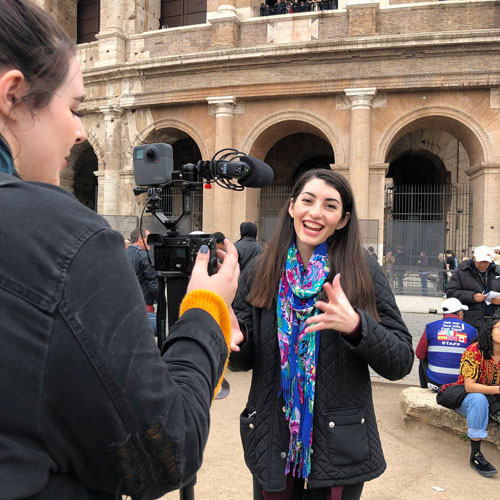
New Media at Molloy
Unlock your potential with Molloy University's New Media program. Dreaming of a career in online content creation, social media marketing, and creative brand strategy? Love learning about and using new and emerging technologies? Look no further. Dive into a curriculum that not only hones critical thinking skills like writing, speaking, analysis, and critique but also equips you with core digital production skills. Learn more about Molloy University's New Media program in the FAQ below and embark on an exciting journey where creativity meets cutting-edge technology. Your future starts here.
Dreaming of a career in social media, gaming, market research, or technology? Look no further. Learn more about Molloy University's New Media program and embark on an exciting journey where creativity meets cutting-edge technology. Your future starts here.
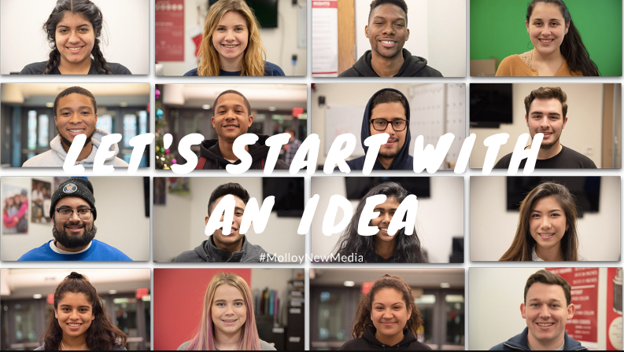
What is new media?
New media refers to any digital communication media that uses the internet and technology to create, share, and interact with online content globally.
What is the New Media degree at Molloy?
Molloy’s New Media undergraduate Bachelor of Science (B.S.) degree is an exciting and technology-driven interdisciplinary program that develops strong communication skills, digital media literacy, and creative multimedia storytelling skills. The New Media degree is a 120 credit hour program that is typically completed in 4 years and often fewer when students bring transfer credits. Our advisors will help you select electives that perfectly complement your goals and career aspirations.
What you will take:
14 general education and related requirement courses (41 credits)
11 required courses in the New Media degree (33 credits)
3 Communication elective courses (9 credits)
12 elective courses (37 credits)
What does a Molloy degree in New Media offer?
This degree is ideal for students who want to pursue careers in online content production, social media, digital creativity, or those interested in attending graduate school.
Our dynamic project-based courses give students the blueprints for their own personalized paths to success. Our students learn how to write and speak clearly and creatively express themselves through various digital media formats. One of our program's strengths is that we encourage students to bring their individual interests and passions to their coursework. We provide the foundational background knowledge, skillsets, resources, and support and our students provide the creativity and vision. We have a focus on professionalization. Course projects reflect the real world we live in and every student leaves the program with a portfolio of their best digital content.
What kinds of classes will you take as a Molloy New Media major?
Our classes are a mix of traditional academic knowledge paired with practical applications and plenty of opportunities for creativity. We focus on foundational communication and digital media skills that can be applied to many contexts. The media landscape is always changing and so we are always updating our curricula to make sure we stay on top of the newest technologies and digital trends. A few of students’ favorite required courses are listed below:
COM 1150 Introduction to Digital Literacies
This course introduces students to core digital literacy concepts and skills. Students use digital tools to produce personal and professional projects and interrogate the sociocultural contexts of their deployment. Students' work culminates in an e-portfolio of their own design that they continually update throughout their time at Molloy. A significant portion (at least 50%) is formal oral presentation work.
COM 2280 Writing for the Web
This course introduces the processes of writing multimodal compositions for select online platforms. Composition includes the following: short form content for microblogging social media sites, long form content for media outlets, personal blogs, interactive digital platforms, and text-based Adobe platforms. Students will learn to analyze online posts and maintain a multipage blog.
COM 2440 Online Content Production
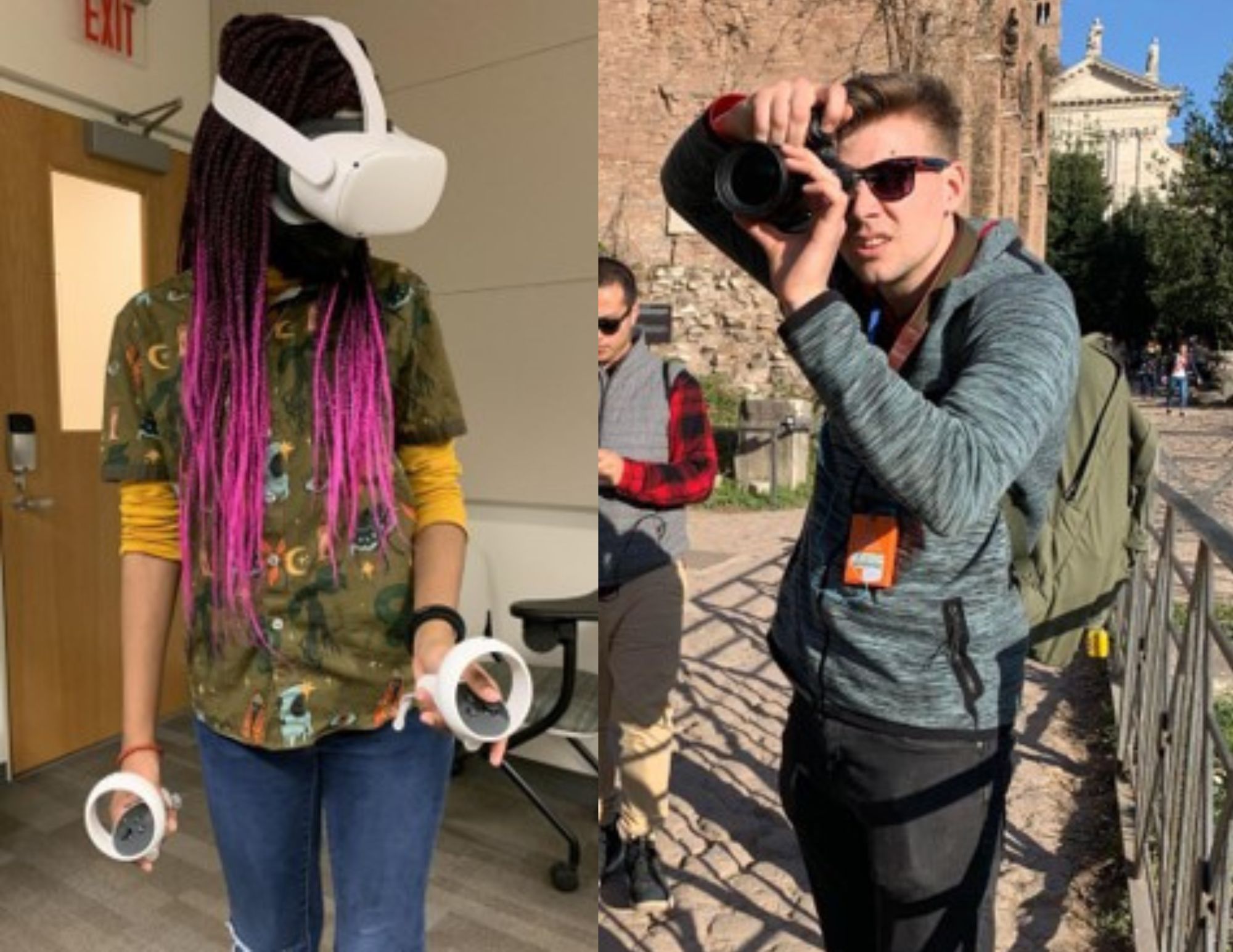
This course focuses on digital media creation, design, and authorship. Students will create visual and multimodal content for the web, including web pages, graphics, memes, thematic social media channels, and immersive 360° video content. Students will work independently and collectively to create online digital material and to critique and enhance online projects.
COM 3101 Video Storytelling for the Web
This course teaches students about digital production and personal expression through video in online environments with an emphasis on the process of visual storytelling informed by data analytics. Students will develop skills necessary to create, edit, and post videos on a variety of platforms while practicing creativity and innovation. Students projects include short-form videos including vlogs, video essays, reaction content, and more.
What are Molloy New Media classes like?
We empower students to confidently tackle intellectual and practical challenges and often have fun doing it! We do not require ANY textbooks for our required courses. Instead, we use open educational materials, publicly available texts, academic journal articles, and videos. Not using textbooks allows us to design each course to be completely unique. Our required courses are typically capped at 15 seats which allow for students to build community among their peers and receive individualized attention from faculty.
What do Molloy New Media students say they like about our classes?
“Overall, I really enjoyed getting to learn new content production skills. Before the class began, I was not sure what to expect in regards to the type of content production we would be doing. Everything we did ended up being pretty unfamiliar to me, but I am honestly really glad that was the case. Learning these tools and techniques from the ground up has made me feel more confident in my learning abilities and ability to adapt.”
-Grace Farrell, Class of 2027 on COM 2440 Online Content Production
“This course helped strengthen my understanding of rhetoric… I learned a lot about misinformation in different corners of the Internet and how to combat it. I thought the conspiracy test assignment was very enlightening in this regard. I also learned about the modern landscape of the Internet in general. I don't explore other corners of the Internet very often, and it was very insightful learning about other users and their own interactions with information and content.”
-Thomas Van Bellinghen, Class of 2027 on COM 2460 Civic Engagement for New Media
What kinds of technology will students use and learn about in New Media courses?

- Critical AI literacies
- Photography
- Adobe Photoshop and Canva
- Adobe Premiere
- Social media platforms like Instagram and TikTok and their analytics
- Streaming services like YouTube and Twitch and their analytics
- Website software like Wix and Squarespace
- Digital video cameras and accessories
- 360° cameras and accessories
- Online and console-based video games and virtual communities
- Twine the interactive fiction platform
- Virtual Reality
- 3-D printing
- Lasercut
- And we are always trying out new technologies!
What kinds of minors pair well with a Molloy New Media degree?
New Media majors have a lot of flexibility in their course options. We encourage students to declare minors that complement the skills they learn in their New Media courses to expand their career potential. Many of our students take a minor or even double minor to cultivate a secondary area of expertise. Common minors that Molloy New Media students take include:
- Business Analytics
- American Studies
- Art & Media Innovation
- Computer Science
- Creative Writing
- Diversity and Inclusion Studies
- Film and Television
- Game Studies
- Gender Studies
- Graphic Design
- Journalism
- Marketing
- Photography
- Public Relations and Corporate Communication
Are internships or hands-on experiences part of the Molloy New Media degree?
Molloy New Media courses prioritize hands-on learning experiences. Most of our program’s courses are project-based and backed by rigorous communication and rhetorical theory. Students practice the real skills they will be using in their future careers. We also regularly invite industry and subject matter experts to guest lecture within our courses so students can learn from their lived experiences.
The Molloy New Media undergraduate degree requires one internship with an option to do two. Students usually do their internships in their senior year.
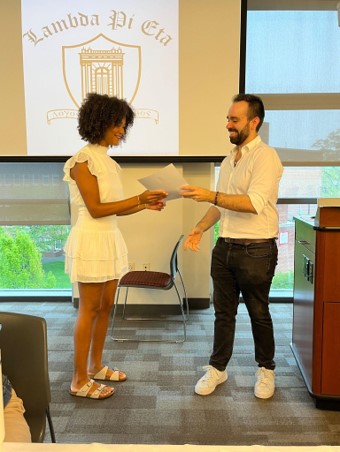
What kinds of careers can I start with a Molloy New Media degree?
Our program has a strong track record of gainful employment and graduate school after graduation. Molloy New Media graduates find work in a wide range of digital media industries. Our graduates become tomorrow’s marketing and social media managers, creative and brand strategists, video editors, and independent content creators.
Are there opportunities for study abroad or exchange programs?
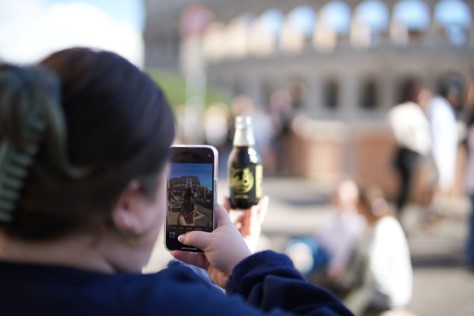
Molloy New Media students get access to Molloy’s international education programming which both offers short and long term travel opportunities tied to academic curricula. New Media faculty have been chaperones on course-connected, project-based short term trips to Northern Ireland, Rome and Florence, Italy, and Croatia.
What have New Media students gone on to do after graduation?
Although this program started in 2017, our graduates have already gone on to achieve great things. Our graduates work for top companies and institutions including:
- Be Electric Studios
- Epic Video Technologies
- Madison Square Garden
- National Hockey League (NHL)
- Nexxen
- UBS Financial Services
- ZSuite Tech
What do past students from the Molloy New Media degree have to say about their experiences with the program?
-
Reno Juman, class of 2024
"I took a leap of faith when I chose to study New Media. If I could break my entire education experience down into a sentence, I would define New Media as the perfect magnifying glass for discovering the potential of our passions and interests without jeopardizing our ability to provide for ourselves and be successful. It gave me an opportunity to widen my understanding of others, myself in relation to others within a digital environment, the infinite possibilities of interacting with technology, how we can amplify our abilities to solve virtually any issue we may have, and to meet the challenges provided by my employer."
-
Heather McEntee, class of 2023
“I was really proud of my YouTube channel that I started in Dr. Evans’ class. Since then it’s grown a bunch and then I created a new channel to document my Salem (Massachusetts) journey. That is actually what brought me my first social media management job. I didn’t apply for it. It came to me based on my content. So that really showed me that my skills were meaningful and it helped bring me to the city I’ve always wanted to live in.”
Undergraduate Admissions Criteria
Admission to Molloy University requires a high school grade point average of 3.0 or higher. Specific entrance requirements include graduation from high school or equivalent with 20.5 units, comprising of:
- English - 4
- Foreign Language - 3
- Mathematics - 3
- Social Studies - 4
- Science - 3
If you’re home-schooled, you must obtain a letter from your local school district officials confirming that you’ve received a "substantially equivalent" education to district high school students or take and pass a Test Assessing Secondary Completion (TASC), formally known as a GED.
Keep in mind that official SAT and ACT scores are required for all students who are applying within one year of high school graduation. For a full scope of admissions requirements for our undergraduate studies, learn more here or contact the Office of Admissions.
A Simple Process for Transfer Applicants
Transfer students are welcome into this program! If you’re a transfer student, you must send official transcripts from your previous accredited institutions and can arrange credit evaluation interviews before applying. If you lack an Associate’s Degree or higher, you’ll need to provide a high school transcript for proof of graduation.
For the full scope of transfer admissions information, learn more here.