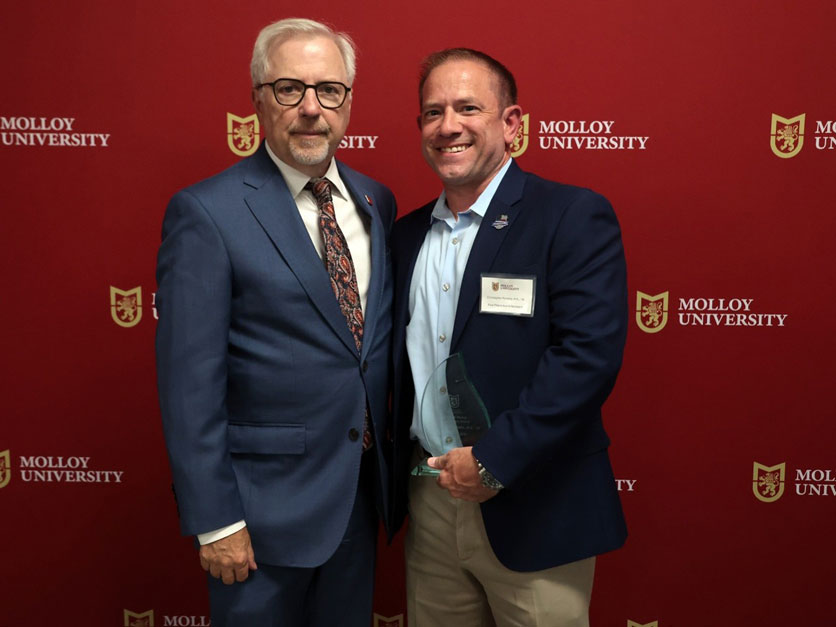
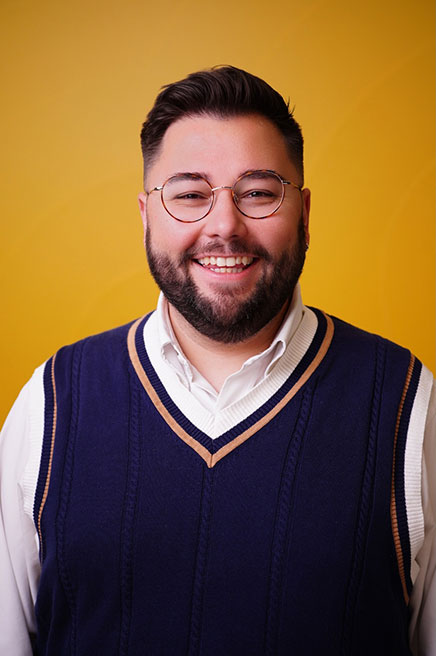
 At Molloy University, commitment to community is more than just a guiding principle. It’s something faculty bring to life through their work with students and the communities they serve every single day. That spirit was on display during a recent Molloy Speaks event, where Dr. Raymond Blanchard, Assistant Professor and Clinical Coordinator in the Clinical Mental Health Counseling program, brought his perspective to a broader conversation on student mental health.
In addition to his work on campus, Dr. Blanchard serves on the North Atlantic Region board of the American Counseling Association, reflecting his continued engagement with the counseling profession and his commitment to advancement in the field.
Drawing from more than a decade of experience, Dr. Blanchard spoke about the importance of a more connected approach to youth mental health, one that considers not just individual behaviors, but the broader systems that shape a student’s life. That perspective is rooted in his early career, when he began working as a school-based mental health counselor in a Harlem school. What started as an unexpected role quickly became a defining experience, shaping his focus on how schools can better support students through collaboration and shared responsibility.
Today, that same focus guides his work at Molloy. As Clinical Coordinator, he mentors students as they prepare for internships and future careers, helping them understand that effective counseling requires both clinical skill and a deep awareness of the environments in which students live and learn.
During his talk, Dr. Blanchard emphasized that many students who need support are not always visible. “The students I'm talking about are the ones who have learned that being quiet is safer than being heard,” he said. “They're not disrupting class; they're not on anyone's radar but they're carrying real clinical-level distress underneath the surface.”
For Dr. Blanchard, recognizing these students begins with a shift in how we define well-being. “Invisibility is not wellness,” he said. “Just because a student isn't acting out doesn't mean they're okay. Better support starts with slowing down long enough to notice who isn't coming to us and building systems and relationships that make it easier for those students to be found.”
Rather than approaching mental health in isolation, he encouraged a broader view that considers the many influences surrounding a student, from family and peers to school climate and community resources. This perspective reflects a systems-based approach, recognizing that a student’s well-being is shaped by a network of relationships, environments, and access to resources.
In many schools, these systems exist, but they do not always connect. Support services often operate in parallel rather than working together, making it more difficult to reach students in meaningful and consistent ways.
“Honestly, it's the gap that keeps me going,” he said. “There are students sitting in schools right now who need psychotherapy, not just a check-in, not just a referral list, and there aren't enough clinically trained people in those buildings to meet that need.”
He pointed to the impact of integrating licensed mental health counselors directly into school communities and working in partnership with educators and support staff. “That collaboration model works,” he said. “Kids get better. Schools feel safer.”
At the center of this work is a commitment to equity. Access to mental health services is not always consistent, particularly in under-resourced communities where funding is limited and needs are often greater. Addressing those gaps requires not only awareness, but advocacy and sustained collaboration.
At Molloy, students in the Clinical Mental Health Counseling program are preparing to meet that challenge. Through hands-on experience and mentorship, they are learning to approach their work with both clinical expertise and a commitment to systemic change.
“What gives me real hope is watching Molloy students develop not just clinical skills, but a professional identity rooted in advocacy,” Dr. Blanchard said. “They're learning early that this work is bigger than any one session. It's systemic, it's relational, and it calls for asking the harder questions about who is being served and what needs to change.”
Events like Molloy Speaks highlight how faculty scholarship and real-world experience come together to address complex challenges. They also reflect a shared belief that meaningful change happens through connection.
By fostering collaboration, investing in mental health, and preparing future counselors to lead with purpose, Molloy is helping to shape a future where every student is recognized, supported, and heard.