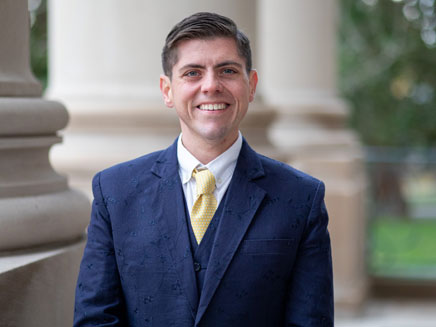
 The Barbara H. Hagan School of Nursing and Health Sciences at Molloy University recently welcomed John R. Patro, OTD, OTR/L, CPAM, FNAP as its inaugural Associate Dean for Health Sciences, bringing with him a strong background in healthcare education, leadership, and student-centered learning.
Patro said he quickly saw a strong alignment between Molloy’s mission and his own philosophy on healthcare education.
“What initially drew me to Molloy was the strong sense of mission and community that is felt throughout the institution,” Patro said. “During the interview process, it became very clear that Molloy genuinely values student-centered education, service, compassion, and preparing healthcare professionals who are not only clinically competent but also deeply humanistic in their approach to care.”
As Associate Dean, Patro will oversee a diverse portfolio of programs including Speech-Language Pathology, Communication Sciences, Respiratory Care, Nuclear Medicine Technology, Cardiovascular Technology, and Health Service Leadership. He said the opportunity to help shape the future of health sciences education at Molloy was especially meaningful.
“I see tremendous opportunity for innovation and growth while remaining grounded in Molloy’s mission and commitment to service,” he said.
A first-generation college graduate, Patro described education as transformative in his own life, an experience that continues to influence his leadership philosophy and commitment to supporting students.
“I have always felt deeply committed to supporting students as they navigate their own educational journeys,” he said.
Patro began his career as an occupational therapist before building a professional background that spans clinical practice, teaching, scholarship, leadership, and service. He earned his Master of Science in Occupational Therapy from the University of Scranton and later completed his Doctor of Occupational Therapy degree at Chatham University, where his doctoral studies focus on adult learning and development. His dissertation explores faculty experiences in fostering culturally responsive learning environments within health professions education.
Over the years, Patro has remained actively involved in mentorship, accreditation work, peer review, conference presentations, and leadership within national and international professional organizations. He was also part of an interprofessional team recognized with the 2020 United States Public Health Service (USPHS) Excellence in Interprofessional Education Collaboration Award for international outreach work in Jamaica and Guatemala.
Patro said his passion for global learning and cultural exploration began early in life after participating in an educational travel opportunity to Europe as a high school student. That experience inspired a lifelong interest in cross-cultural engagement and later helped shape educational partnerships and learning opportunities for students in countries including Guatemala and Vietnam.
Now stepping into his new role at Molloy, Patro said he is particularly energized by the opportunity to strengthen connections across the university’s health sciences programs.
“What excites me most is the opportunity to bring people together around a shared purpose,” he said. “Healthcare today depends on collaboration. Patients are best served when professionals understand not only their own role but also how to work effectively alongside others.”
He hopes to create opportunities for students and faculty to engage across disciplines through shared coursework, simulations, service projects, and community initiatives while encouraging programs to work more closely together.
Looking ahead, Patro sees opportunities for continued growth in areas such as healthcare technology, flexible program delivery, global engagement, and collaborative learning experiences. At the same time, he emphasized the importance of ensuring innovation remains grounded in student support and educational quality.
“Healthcare environments are constantly changing, so students need to become lifelong learners who are comfortable with innovation and problem-solving,” he said. “Most importantly, students need to understand the human side of healthcare. Compassion, empathy, and the ability to connect with patients and communities remain foundational regardless of how technology evolves.”
As he begins this new role, Patro said he is approaching the opportunity with humility and gratitude.
“I value relationships deeply, and I believe leadership begins with collaboration, trust, and being present for students and colleagues,” he said. “At the heart of everything I do is a belief in the power of education to transform lives.”