 For parents sending their children off to college this fall, preparing for campus life now includes a new question: How should students use artificial intelligence without allowing it to replace the skills they are there to learn?
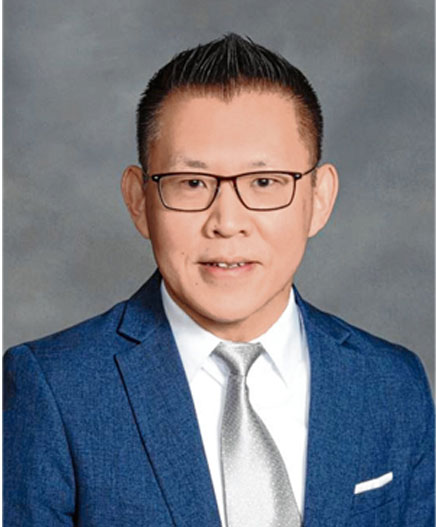
Professor Alexander Chan, an assistant professor in Molloy University’s School of Business, said parents have raised concerns about their children becoming overly dependent on AI.
“I think the first important thing to do is to admit what we don't know,” Chan said.
“I think in that conversation, it's not about what I'm teaching you to do, or what I'm telling you to watch out for, it's basically to explore the maybe uncertainties and also the unknown elements along this journey and say it's something that we need to work out together,” he said.
“So, we need to keep this communication open,” Chan continued. “It's not a one-off conversation.”
Chan said parents should also avoid being overly optimistic or pessimistic about AI. He said families should revisit the conversation as new tools emerge quickly.
Parents also should avoid making discussions solely about cheating. Chan said students need to remain responsible for work AI helps produce.
“It’s perfectly OK to use AI to do research or even to come up with the first draft for an assignment,” Chan said. “But ultimately, the student should be aware that they should be able to present the outputs.”
That means parents can ask their children whether they understand material AI helped produce and could explain or defend it themselves.
“If they are not able to own the output, then their value proposition would be marginalized,” Chan said.
Chan said students who simply feed assignment requirements into AI and submit the results could put themselves at a disadvantage later.
Parents can encourage their children to use the technology while remaining engaged in the process.
In his Applied AI for Business course, Chan teaches students to identify the problem they are trying to solve before determining how AI can help.
“AI is just a means to an end,” Chan said.
Chan said the distinction between using AI as a learning tool and using it to complete an assignment is not fixed.
“I wouldn't say the line is blurred, I would say the line is moving all the time,” he said.
That changing line makes it important for students to develop judgment about when and how to use AI rather than rely on rules that could quickly become outdated.
Chan said employers want AI-ready candidates, but they also want problem-solvers. He encourages students to develop projects they can demonstrate to prospective employers rather than simply listing an AI course on their résumé.
“If the only thing you can tell the employers is that I've done a course in AI, I passed with a grade A, the employers; they are not going to be terribly convinced,” Chan said.
For parents, that means encouraging children to explore AI while focusing on what they are learning through that exploration. Chan said students need to continue teaching themselves because AI cannot be mastered through a single course or curriculum.
“I think, you know, the biggest misconception among them is that AI is something that, you know, you can just learn through doing a course or following a curriculum,” Chan said. “But the reality is AI is evolving all the time.”
Chan’s ultimate message to parents is one of encouragement rather than fear. Parents, he said, should “allay their fears” and let their children know they have their support as they explore the technology.
“It’s about being willing to open themselves to new possibilities, to new learning possibilities,” Chan said.
“[Parents should say] we are 100 percent behind you,” Chan said. “And if you go forward, and we will support you all the way.”
For more information, visit LIHerald.com