-
230 educators and education leaders attended: Molloy University hosted its second annual Literacy Conference, bringing together professionals from across Long Island.
-
Literacy goes beyond reading and writing: Sessions explored how communication, critical thinking and comprehension support learning across all academic disciplines.
-
AI and evolving education standards took center stage: Presentations and workshops examined AI's impact on instruction, student writing, assessment and the future of New York's graduation requirements.
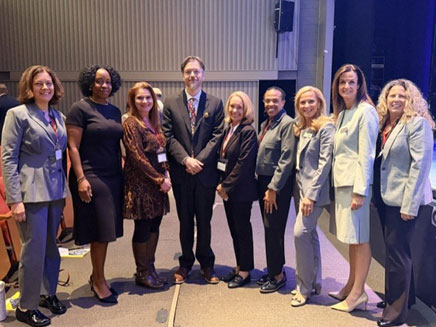
Molloy University welcomed approximately 230 educators, students and educational leaders to its second annual Literacy Conference on Oct. 16, bringing together professionals from across Long Island to explore innovative teaching strategies, emerging educational trends and the evolving role of literacy in classrooms from prekindergarten through higher education.
The conference, themed "Embracing Literacy Practices in All Disciplines: Past, Present, and Future, PreK–20," emphasized the importance of literacy beyond traditional reading and writing instruction. Through expert-led presentations, panel discussions and interactive workshops, participants explored how literacy skills, including communication, critical thinking and comprehension, support student success across academic disciplines.
Now in its second year at Molloy, the annual event continues to strengthen connections among educators while providing opportunities to exchange ideas, share research-based practices and address challenges facing today's classrooms.
"Literacy is not something that belongs exclusively in an English classroom. It is the foundation of learning across every subject, at every grade level," said Dr. Vicky Giouroukakis, associate dean of the School of Education and Human Services. "Whether students are interpreting scientific information, analyzing historical events or communicating their own ideas, strong literacy skills are essential. Bringing educators together across disciplines allows us to share strategies, learn from one another and ultimately create stronger learning experiences for all students."
A central focus of the conference was the changing educational landscape, particularly the growing influence of artificial intelligence (AI) and evolving approaches to assessing student achievement.
The conference featured a keynote address by Angelique Johnson-Dingle, deputy commissioner for P-12 instructional support at the New York State Education Department. A panel featuring Johnson-Dingle, Dr. Madeline Craig, Dr. Maureen Martin and Dr. Patrick Fogarty examined literacy across content areas and the implications of AI for student writing and instruction. Discussions also addressed New York state's transition away from requiring Regents examinations for high school graduation, highlighting the importance of preparing educators for new approaches to demonstrating student proficiency.
Across 24 workshops held during three sessions throughout the day, participants explored practical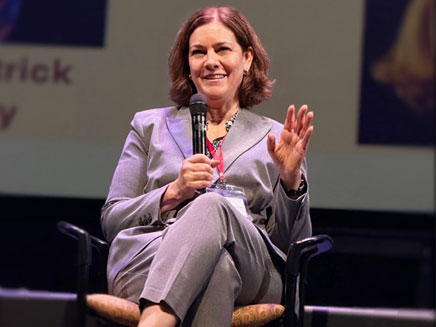 strategies for strengthening literacy instruction among diverse student populations. Topics ranged from disciplinary literacy in the age of AI and misinformation to personalized learning, reading assessment, multilingual learner support and integrating writing instruction across subject areas.
One workshop, "Smoothing the Stumble: Clear and Repeatable Strategies for Reading and Writing Multisyllabic Words," presented by Jessica Keegan, Emma Annonio and Rina Hartigan, offered educators actionable techniques to support developing readers and writers.
"The presenters provided great, user-friendly tools and resources that can be put into practice," one participant shared. "Students will be able to internalize these checklists and use them to deepen their learning."
Another workshop, "Wrapping Students around Writing through Content Areas," led by Elizabeth Roemer, Maureen Martin, Elizabeth Thielemann and Ashley Terrillion, explored how integrated writing instruction can strengthen learning outcomes across disciplines.
One attendee praised the workshop's approach, noting that it demonstrated how effective instruction can lead to "better student outcomes, greater teacher efficacy, and a more empathetic student experience."
The conference also provided meaningful professional development and networking opportunities for current educators, administrators, researchers and Molloy students preparing to enter the field. Participants had opportunities to earn continuing education credits, while the event's Literacy Luminary Awards recognized outstanding contributions to literacy education across various academic levels.
Presented by Elizabeth Roemer, assistant superintendent of curriculum and instruction at Island Trees School District, and Laurie Bocca, an English teacher at Garden City School District, the awards honored five educators for their contributions to the field:
- Rising Star: Tiffany Maksimowicz, Island Park Public Schools
- Early Elementary/Elementary: Gwyn Solomon, Oceanside Union Free School District
- Secondary: Mary Kay Mannle, New Hyde Park Memorial High School
- Leadership/Administration: Theresa Walter, Great Neck Public Schools
- Higher Education: Kerry Vann, Molloy University
Organized with support from a 17-member committee that included faculty and students from Molloy and other institutions, the conference reflected a collaborative commitment to strengthening educational practices throughout the region.
By connecting educators across grade levels and subject areas, Molloy's Literacy Conference reinforced the University's commitment to community engagement, professional learning and educational excellence. As classrooms and instructional approaches continue to evolve, the event underscored the value of collaboration in preparing students with the skills they need to learn, communicate and succeed.