 For 30 years, generations of Molloy University students have made the journey to the mountains of West Virginia, building relationships that have lasted far beyond their time there.
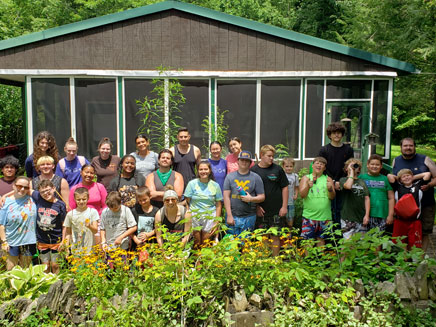
This summer, eight Molloy students and six alumni traveled to Kermit, West Virginia, to continue that tradition at the Big Laurel Learning Center as the University celebrated the 30th anniversary of its Appalachia Project.
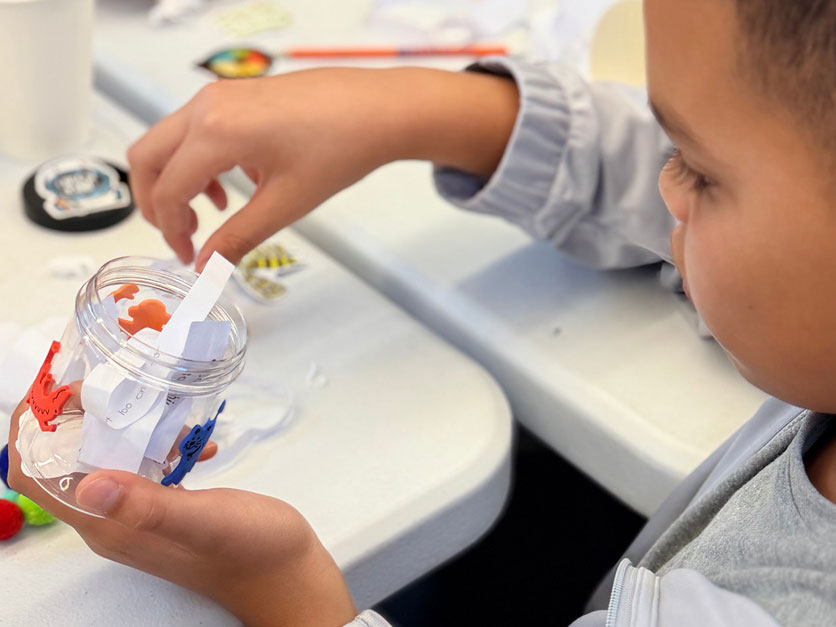
Since 1996, the Appalachia Project has brought members of the Molloy community to Big Laurel for a week centered on service, mentorship and connection. This year, students served as mentors during a sleepaway camp for boys ages 7 to 16, joining campers for activities including hiking, mountain biking, swimming, arts and crafts and sports. Returning alumni supported the Big Laurel staff with maintenance projects around the mountain.
While the activities have evolved and generations of students have come and gone, the relationships formed through the program have remained at its heart.
“What has made the Appalachia Project so meaningful is the consistency of the relationship,” said Michelle Martin, EdD, director of Mission and Ministry. “For three decades, Molloy students, faculty, staff, and alumni have returned to the same community, allowing us to build genuine connections rather than simply provide a one-time service experience.”
Over those three decades, Molloy participants have watched children grow into adults, remain connected with families and return to a place that, for many, has come to feel like a second home.
For alumnus Andrew Abberton, ’13, MS ’17, that connection began in 2010, when then-campus minister Sister Diane Capuano invited him to participate in the Appalachia Project. He arrived with few expectations, but after his first summer at Big Laurel, he was hooked.
“What keeps me coming back is the relationships I have built with the sisters there, the relationships with the campers and their families,” Abberton said. “Every year it feels like going home.”
Those relationships now extend well beyond the annual summer trip. Abberton stays in contact with members of the Big Laurel community throughout the year and has watched boys he first met as 13-year-old campers grow into adults with careers, relationships and families of their own. Some of their younger siblings, whom he remembers meeting as babies, have since become campers themselves.
One relationship even brought Abberton back to West Virginia for a milestone far removed from summer camp. A former camper traveled to Big Laurel to personally invite Abberton and another Molloy alumnus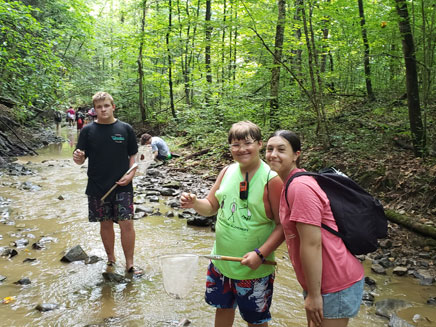 to his wedding. Abberton later returned to attend the celebration.
“I was so touched that he thought of us on his special day,” Abberton recalled, describing it as “one of the sweetest moments I have ever experienced.”
For Nicholas Wood, ’11, MBA ’13, 12 trips to Big Laurel over the course of 16 years have created a similar connection. Wood first joined the Appalachia Project after encouragement from Abberton and Sister Diane, drawn to the opportunity to make a positive impact and put his values into action. What has kept him returning, however, is a growing sense of responsibility to the program and those who will experience it after him.
“I continue to come back because I feel both blessed and called to be a part of something bigger than myself, as well as an obligation to help steward the program for the next generation of alumni,” Wood said. “I always say that it really is a blessing of a lifetime to be part of this and I will always be grateful for it.”
As the years have passed, the role of Molloy alumni at Big Laurel has evolved. As students, Abberton and his peers served as mentors and participated alongside the campers. Today, returning alumni take on maintenance and service projects around the mountain, allowing current Molloy students to become the campers’ primary mentors.
For Wood, that evolution allows alumni to support Big Laurel wherever they are needed while giving current students the space to form their own relationships with campers. It also gives longtime participants the opportunity to watch new generations discover the experience for themselves.
“It is really cool,” Wood said. “One of the best parts of being an alumnus is seeing the current students embrace the experience, interact with the campers, and fall in love with the mountain the same way we have.”
Abberton shares that sentiment.
“It truly is a privilege to watch them interact and really watch the students fall in love with Big Laurel just like we did,” Abberton said. “It is nice to see that they share the same awe and amazement of this experience as I did and still do today.”
Emma Hertler is among that new generation, although Big Laurel is no longer new to her. This summer marked her third year participating in the Appalachia Project.
“The genuine and authentic connections made among the campers and volunteers is what makes Big Laurel a home away from home.” Hertler said.
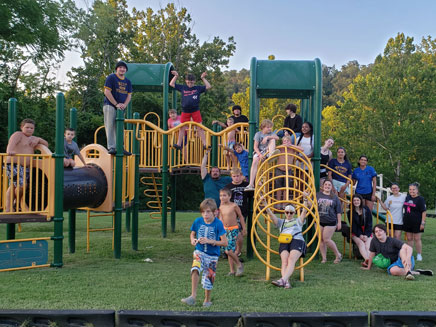
One of her most memorable moments came on the final full day of this summer’s camp, when the group visited a pool and playground. Campers, mentors and alumni began playing games of tag together around the park.
“In that moment, the campers did not have a care in the world and could just be kids,” Hertler said. “Being able to be a part of a memory so joy-filled, with campers that are new and others from years past, is a true privilege.”
For Hertler, some of the most meaningful experiences are also the simplest. This year, she was paired with a camper she had not interacted with much during previous trips. Throughout the week, the two got to know each other, including one afternoon spent searching for crawdads, salamanders and minnows together in a creek.
Experiences like these have also shaped her understanding of what it means to serve others.
“We know that we cannot change the circumstances of the boys’ lives, but we can give them this week of camp to have fun, be cared for, and be present,” Hertler said.
It is a philosophy that Martin hopes students carry with them long after leaving the mountain.
“I hope students leave Big Laurel with a deeper understanding of what it means to accompany others,” Martin said. “The experience teaches that service is not about fixing problems for people, but about building relationships, listening, and recognizing the dignity and gifts present in every community.”
Thirty years after the first Molloy group traveled to Appalachia, the project has become a shared experience connecting generations of the University community. Current students learn alongside alumni who once stood in their place, while longtime participants return year after year to friendships that have grown alongside the program itself. For alumni like Abberton and Wood, returning also means helping ensure that the experience continues for those who come next.
“The experience becomes a shared story that connects generations of students and alumni,” Martin said. “Even years after graduation, participants can talk about the same people, places, and experiences, creating a lasting sense of community and belonging that is unique to the Appalachia Project.”
For Hertler, becoming part of that 30-year history has only strengthened her desire to continue it.
“To be a part of the traditions within this camp and celebrate the 30th anniversary is such an honor,” Hertler said. “This past summer marked my third year attending Big Laurel and, God willing, there will be many more.”
Deprecated: strtolower(): Passing null to parameter #1 ($string) of type string is deprecated in phar://W:/Clients/Prod/molloy/docs/files/php/phar/brei.feedmanager.phar/Config/Config.php on line 40
Deprecated: strtolower(): Passing null to parameter #1 ($string) of type string is deprecated in phar://W:/Clients/Prod/molloy/docs/files/php/phar/brei.feedmanager.phar/Config/Config.php on line 40
Deprecated: strtolower(): Passing null to parameter #1 ($string) of type string is deprecated in phar://W:/Clients/Prod/molloy/docs/files/php/phar/brei.feedmanager.phar/Config/Config.php on line 40
Deprecated: strtolower(): Passing null to parameter #1 ($string) of type string is deprecated in phar://W:/Clients/Prod/molloy/docs/files/php/phar/brei.feedmanager.phar/Config/Config.php on line 40